



.png)


The Application marketplace for NetSuite and Salesforce
The market places for NetSuite and Salesforce applications are extensive, so there is clearly demand.
- As of 2025, Salesforce AppExchange is recognized as the world's largest marketplace for business applications, boasting over 4,600 listed apps.
- NetSuite applications: includes hundreds of quality solutions built using the SuiteCloud platform. These NetSuite applications are designed to enhance NetSuite's ERP capabilities, offering functionalities that address industry-specific requirements and business processes.
Why 'All-in-One' Systems Like NetSuite and Salesforce Still Need Applications
1. Flexibility
Even though platforms like NetSuite or Salesforce cover a lot of ground (ERP, CRM, finance, etc.), no system fits every business model or workflow out of the box. Applications (add-ons or custom-built integrations) help:
- Extend functionality (e.g., industry-specific compliance)
- Fill in gaps that the core system doesn't address
For example, at Cloud Doing Good, we have developed numerous customisations for impact organisations like fund reporting enhancements and sub-grantee management.
2. Applications are cost effective
NetSuite and Salesforce platforms are structured to allow for customisation code developed for one customer to be easily transferred to another instance. This makes it highly cost effective to build and share applications, compared with bespoke build.
3. Faster Innovation Through Partners
By encouraging a developer and ISV ecosystem such as Cloud Doing Good, the platforms outsource innovation. New features, compliance tools, or integrations are built by third parties, which keeps the core system lean and scalable.
4. Pricing benefits
NetSuite and Salesforce platforms are enterprise grade platforms, with pricing models that reflect this. Sometimes, smart use of applications can give organisations all the benefits of the enterprise grade, then allow for user pricing costs to be contained.
For example, Cloud Doing Good developed a employee portal model for a national charity that allows thousands of care workers to access and enter expense claims, without the need for individual user licences.
So Why Not Just Use a cheap Finance system + Integrations?
But there is a counterpoint— if you are going to use applications anyway, why not choose lowest cost tools (e.g., Xero/Quickbooks for finance, SugarCRM for CRM) and connect them?
That approach can work—but it comes with trade-offs:
The Strategic Choice
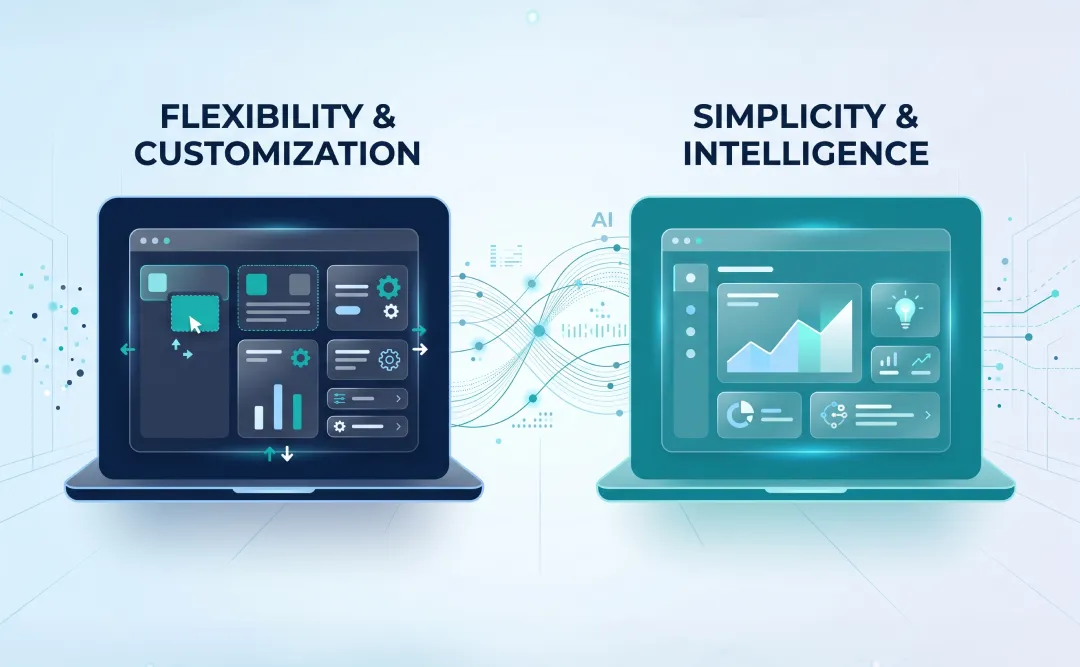
It's a scale vs. simplicity debate:
- Small and mid-sized companies might thrive with modular tools—until integration becomes a bottleneck.
- Larger or fast-scaling companies often consolidate onto an all-in-one platform to manage data consistency, governance, reporting, and user access at scale.
So the answer to the “Why not go upfront cheaper?” question is:
You can—but there are two factors to watch out for:
- Hidden maintenance costs.
- Data silos.
- It’s not just about license cost. It’s about complexity, data reliability, and scalability. All-in-one platforms offer structure and stability, and their apps add the flexibility needed to fit real-world business needs.
At Cloud Doing Good, we specialize in helping businesses unlock the full potential of NetSuite. Want to learn more? Quick introductory consultation call with us.
What's next
Why NetSuite applications solve more problems than integrations ever could
.webp)


.webp)
.webp)
.webp)

.webp)
.webp)

.webp)
.webp)
.webp)
.webp)
.png)
.png)
.png)