



.png)

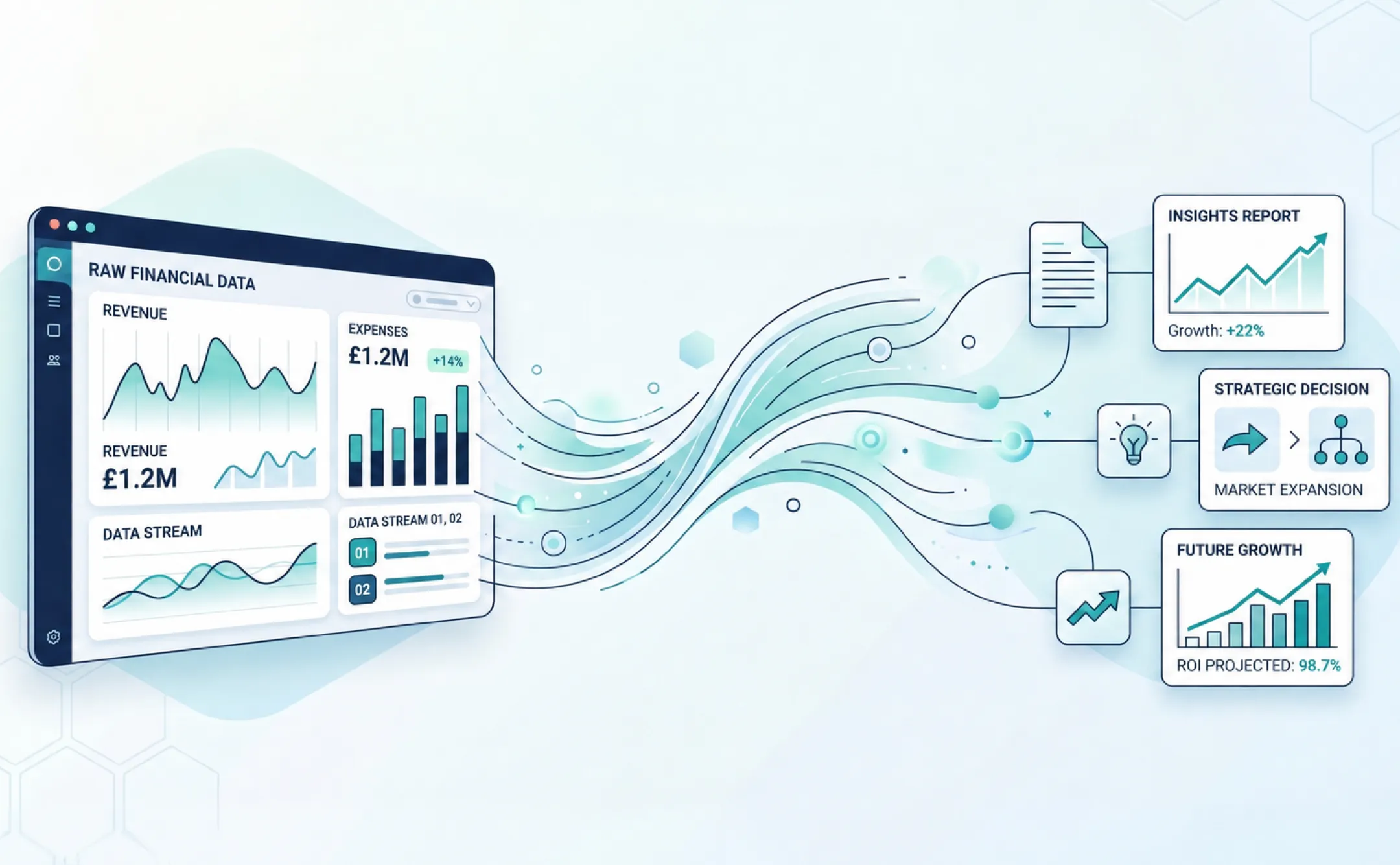
AI Creates Value in Two Different Areas of Finance
For finance directors, AI has moved from a future agenda item to a present question. The marketing volume is high, so a useful starting point is a distinction: AI touches a finance function in two different places, and they behave differently. One is process. The other is reporting.
On process, AI is already taking real work out of the cycle - document capture, invoice matching, exception handling, anomaly detection, and routine "how do I do this" questions inside the system. This is where AI most directly reduces existing system or people cost, because it removes repetitive handling rather than adding a layer on top.
On reporting, the shift drawing attention is conversational reporting - asking a question in plain language and getting an answer back from your own data. "What is our overdue position right now?" "Compare this year to last, month by month." The answer arrives without someone building a report or exporting to a spreadsheet first.
Why Data Quality and Business Rules Matter More Than AI
There is a caveat underneath all of this, and it is the one we keep returning to. AI does not fix your data architecture. If your chart of accounts, your fund or entity structure, or your dimensions or what coding is entered on transactions are not right, AI simply gives you faster access to numbers you cannot trust. That problem has always been foundational, and it remains so.
It is also worth being clear about where AI does not belong. Statutory reporting - the regulated, audited output - stays in the accounting system, governed by the same rules and controls it always has been. Where AI earns its place is as an enabler of management reporting: the internal, decision-supporting view finance teams spend real time assembling.
The most interesting aspect, and the least discussed, is business rules. A finance function runs on rules - how costs are apportioned, how income is recognised, how funds are treated. The better pattern is to keep those rules explicit and version-controlled, so an AI needs to apply defined, verifiable, auditable rules rather than guessing. That is the difference between an answer you can put in front of an auditor and one you cannot.
So: treat process and reporting as distinct, expect the early savings on process, and get the data architecture right first - because every AI claim quietly depends on it.
We make it work. You make it matter.
.webp)


.webp)
.webp)
.webp)


.webp)
.webp)

.webp)
.webp)
.webp)
.webp)
.png)
.png)
.png)