



.png)

.webp)
.webp)
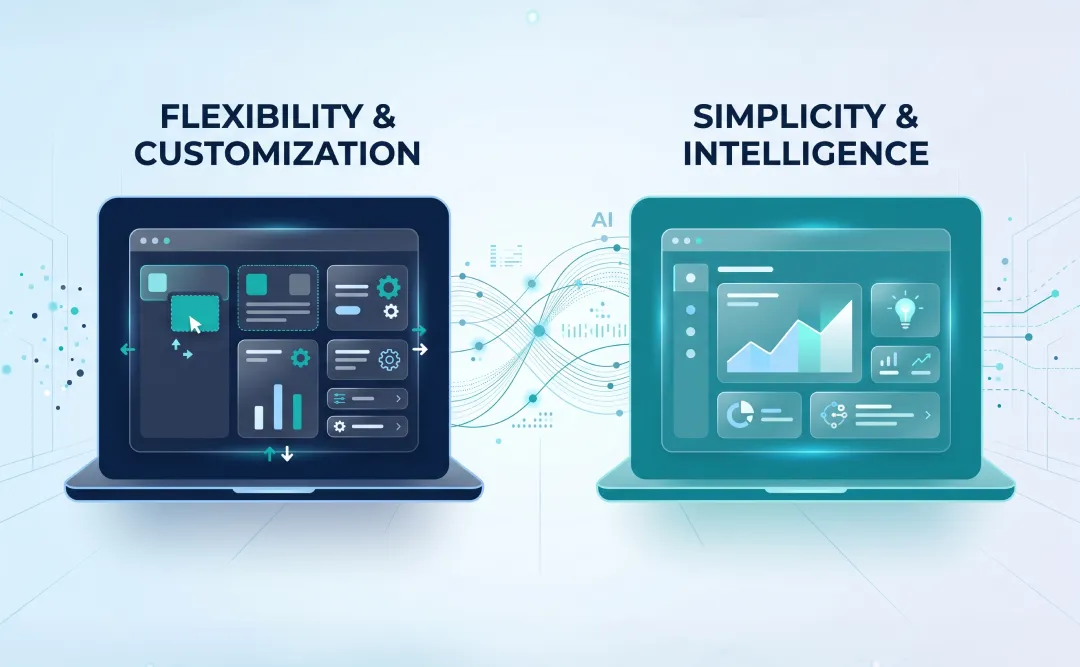
Two strong systems. Two different philosophies.
Both iplicit and NetSuite are excellent cloud accounting software, and both can serve charities well. The key difference lies in how they are built and how that affects the experience of using them day to day.
NetSuite is a mature, enterprise-grade platform with a powerful configuration and customisation engine. This means that in addition to being a powerful pre-built solution, you can further shape the system to match your organisation’s exact requirements. It is flexible, scalable, and designed to grow with you.
iplicit takes a different approach. It has a strong configuration engine, so you can shape the system within its built-in tools, but it does not have a customisation engine.
The configuration and customisation engine: NetSuite’s greatest strength
NetSuite’s configuration and customisation engine is what sets it apart as a platform. It allows you to build workflows, automate processes, and tailor the system to fit your charity’s unique structure - whether that is complex multi-currency grant reporting, intercompany consolidation, or bespoke approval chains.
It is worth pausing here to clarify what we mean by configuration, because it is often confused with customisation. Configuration means shaping the system using its built-in tools - setting up workflows, defining approval rules, choosing which fields appear on which screens. No code is involved. It is like arranging furniture in a well-designed room: the room is already built, but you decide how to lay it out. Customisation goes further - it involves flexing how the system works at a slightly deeper level. NetSuite supports both. iplicit has a configuration engine, so you can set up workflows and tailor the system within its built-in tools. What it does not have is a customisation engine - you cannot script into it or extend it. This keeps things simpler, but it does mean you are working within the boundaries the platform defines.
For larger or more complex charities, this flexibility is invaluable. If your charity has operations across multiple countries, runs a wide range of funding streams, or needs to shape the system around highly specific internal processes, NetSuite’s configuration and customisation capabilities give you the room to do it properly.
The great news is that CDG implements and supports both. Whether you go with NetSuite or iplicit, you will have a team that knows both platforms inside out and can make the most of whichever one is right for you.

Pre-built functionality: iplicit's greatest strength
iplicit’s strength is in the opposite direction. It does have a configuration engine - you can set up workflows, adjust settings, and tailor the system using its built-in tools. What it does not have is a customisation engine. That means you cannot script into it or extend it at code level. The practical effect is that much of what you need comes pre-built and ready to use. Things such as GoCardless integration are already there.
This means iplicit can be up and running faster. For smaller charities or those with straightforward requirements, this is often exactly what is needed. You get a clean, purposeful system.
The trade-off is less flexibility. Because the system is more fixed about how things work, there is less room to reshape it around unusual or highly specific processes. For most charities, this is a reasonable exchange. For those with complex needs, it may not be.
Integrations: covered for both platforms
One area where neither system needs to be chosen over the other is integrations. Cloud Doing Good runs its own low-code integration platform, which works with both iplicit and NetSuite. It comes with over 600 pre-built connectors, covering the systems charities typically need to connect - from payment providers and fundraising tools through to CRM platforms and payroll. Whether you choose iplicit or NetSuite, CDG will handle the integrations.
A quick comparison
So which one is right for your charity?
The answer is: it depends on your organisation. Neither system is universally better than the other. The right choice comes down to the complexity of your operations, the size of your finance team, how quickly you need to go live, and how much you anticipate your needs changing over time. If your charity is smaller, your processes are relatively straightforward, and you want to be up and running quickly, iplicit is likely the stronger fit.
If your charity is growing, operates internationally, or has complex reporting and integration requirements, NetSuite will give you the flexibility to scale properly.
.webp)


.webp)
.webp)
.webp)

.webp)
.webp)

.webp)
.webp)
.webp)
.webp)
.png)
.png)
.png)